Last updated: April 1, 2026
Ubud for Expats for Dubai Expats — The Complete 2026 Guide
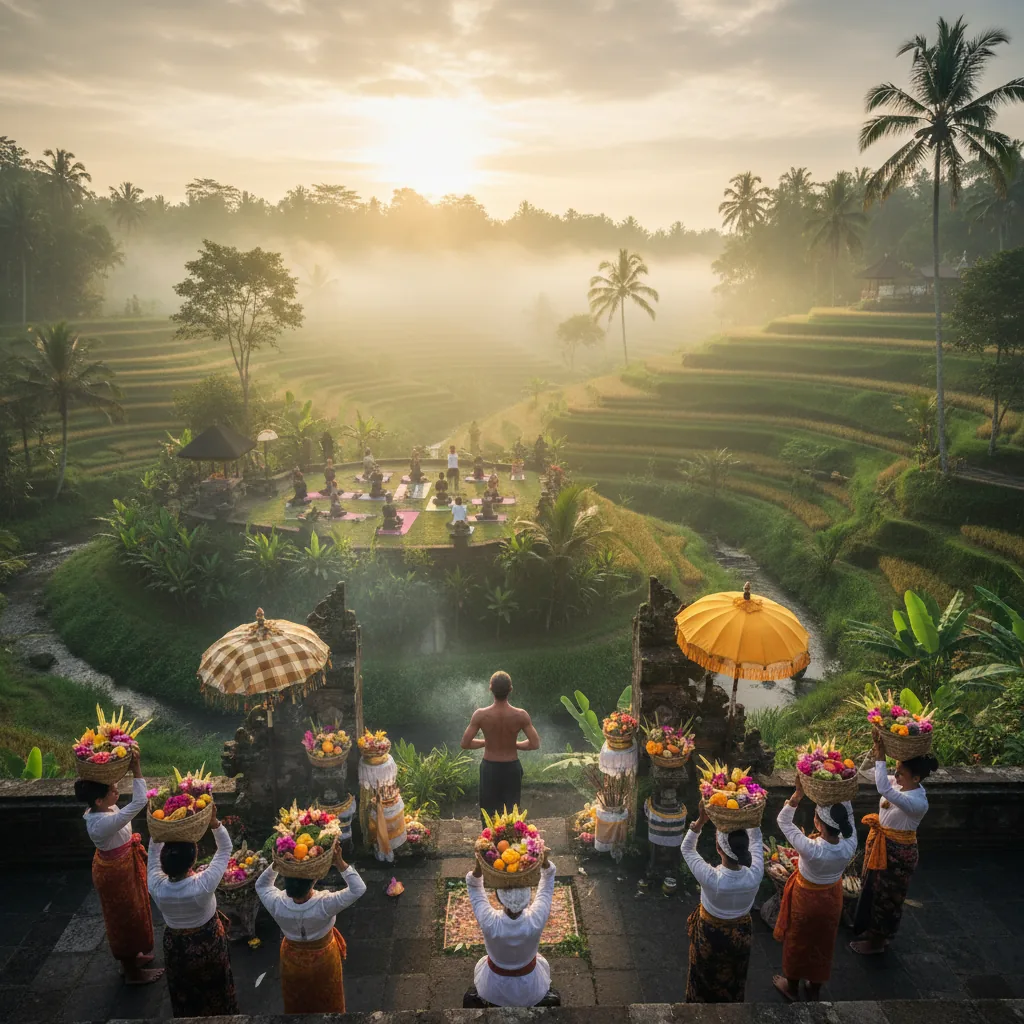
Ubud is Bali’s cultural heart — a lush inland retreat surrounded by rice terraces, traditional art villages, and a thriving wellness community. For Dubai expats seeking a genuine life reset, Ubud delivers. Of the 400+ Dubai families we’ve relocated to Bali, a significant number choose Ubud for exactly that reason. This guide gives you the unfiltered reality — prices, lifestyle, schools, healthcare, and internet quality — from expats who actually live here.
Ubud offers Dubai expats tranquility, nature, and a deeply nourishing environment at the lowest cost of Bali’s top expat areas. 3-bedroom villas with rice terrace views range from $900–$1,600/month. The digital nomad and wellness community is world-renowned.
Who Lives in Ubud?
Ubud attracts Dubai expats who are done with the city hustle and seeking genuine balance. Wellness professionals, writers, artists, and entrepreneurs who work independently thrive here. Families with holistic education values choose Ubud for its proximity to Green School Bali and the outdoor, nature-based learning environment. The community skews slightly older and more intentional than Canggu.
✅ Pros for Dubai Expats
• Most affordable of Bali’s top expat areas
• Stunning natural environment (rice terraces, jungle)
• World-class yoga, wellness, and retreat scene
• Thriving arts and cultural community
• Organic food culture (best in Bali)
• No mass-market tourism noise
⚠️ Consider Before Choosing
• 1 hour from airport and south Bali beaches
• Cooler and more humid than coastal areas
• Less nightlife and beach club scene
• Internet can be less consistent in rural areas
• Some areas flood in wet season (Nov–Mar)
Property Prices in Ubud
2-bedroom villa: $600–$1,200/month. 3-bedroom villa with rice terrace views: $900–$1,600/month. Luxury retreat-style villa: $1,500–$2,800/month. Apartments: $400–$800/month. All prices are monthly in USD. Our property search service will shortlist vetted options within 48 hours of your brief.
Frequently Asked Questions
Is Ubud practical for families?
Yes, particularly for families choosing Green School Bali — the school is between Ubud and Canggu and is easily accessible. Ubud has its own international medical clinic (BIMC Ubud), reliable supermarkets, and a thriving family community. The main trade-off is distance from south Bali beaches and the airport (1 hour in normal traffic).
What is the wellness scene in Ubud like?
Ubud is one of Asia’s premier wellness destinations. You’ll find 100+ yoga studios, Ayurvedic clinics, sound healing practitioners, raw food cafés, detox retreat centres, and every modality of holistic wellness. Many Dubai expats who moved to Ubud report that within 3 months they feel decades younger. The contrast with Dubai’s high-stress environment is profound.
Can I work remotely from Ubud?
Yes. Internet quality in Ubud’s main areas (central Ubud, Penestanan, Mas) is good to excellent with fibre connections available. Co-working spaces include Hubud (Bali’s original co-working space) and Outpost Ubud. Power outages can occasionally disrupt work — most expats have UPS systems or use co-working spaces for important calls.
Ubud: Bali’s Cultural and Spiritual Heart
Ubud sits in Bali’s geographic and spiritual center — elevated above sea level in the foothills of the Batukaru range, surrounded by terraced rice paddies, ancient temples, and the dense tropical forest of the Campuhan Ridge. The town that inspired Elizabeth Gilbert’s Eat Pray Love has evolved far beyond that singular cultural moment into a genuine world-class center for wellness, arts, and conscious living. For Dubai expats who have felt increasingly disconnected from nature, meaning, and community, Ubud consistently acts as a powerful counterpoint.
The Ubud art market, Royal Palace, and network of galleries represent the highest concentration of traditional Balinese artistic production anywhere on the island. Master painters, woodcarvers, silversmiths, and textile artists maintain workshops throughout the Ubud area, many of which welcome visitors and commission work directly. The ARMA Museum (Agung Rai Museum of Art) houses one of the world’s finest collections of traditional and contemporary Balinese art. The Puri Lukisan Museum, established in 1956, documents the full arc of Balinese painting from the pre-tourist classical period through the Western-influenced modernism of the 1930s Ubud School.
Wellness, Yoga, and the Ubud Healing Tradition
Ubud is Southeast Asia’s preeminent wellness destination, with a density of yoga studios, healing practitioners, retreat centers, and holistic health facilities that rivals destinations in India at a fraction of the price. The Yoga Barn hosts multiple classes daily across yoga traditions from Ashtanga to Yin, plus workshops, teacher trainings, and a regular schedule of visiting international teachers. Radiantly Alive, The Practice, and dozens of smaller studios cater to every tradition and skill level.
Traditional Balinese healing — through balian (traditional healers), water purification ceremonies at temples like Tirta Empul and Pura Tirta, and the rhythms of the Balinese Hindu ceremonial calendar — is accessible to respectful visitors and residents in Ubud in a way that is becoming increasingly rare as Bali’s south coast becomes more commercialized. Living in Ubud means participating, if one chooses, in a living cultural tradition of extraordinary depth and beauty.
Property in Ubud is generally more affordable than Canggu, with rice field villas available from USD 800-1,500 per month. The trade-off is distance from the coast (Ubud is 20-30km from the nearest beaches) and a somewhat less developed expat amenity scene. Internet connectivity, once a weakness, has improved dramatically with fiber connections now available in most residential areas. Ubud suits the expat who prioritizes cultural immersion, natural surroundings, and inner peace over surf access and nightlife — a profile that describes a significant proportion of the Dubai professionals currently reassessing their lives in the context of 2026’s regional instability.
Practical Life in Ubud: Infrastructure and Community
Ubud’s practical infrastructure has improved significantly in the past five years while retaining its distinctly non-corporate character. The weekend Ubud traditional market, open daily but at its most vibrant Saturday and Sunday mornings, provides fresh produce, local food items, and artisan goods. The Bintang Supermarket and several smaller international-product stores now meet most daily household needs. The restaurant scene, anchored by decades of development catering to wellness tourists and long-term residents, offers extraordinary value — Locavore, one of Southeast Asia’s most acclaimed restaurants, operates in Ubud and provides a Michelin-level fine dining experience at prices that represent extraordinary value against equivalent European or Australian dining.
Traffic in Ubud requires adjustment — the main Monkey Forest Road and Jalan Raya Ubud are consistently congested during peak hours, making scooter the practical choice for local navigation (cars become useful for excursions but are counterproductive for daily town errands). The Campuhan Ridge Walk — a 2km ridge path through rice fields and tropical forest — is accessible on foot from Ubud’s center and provides the kind of natural respite that makes daily life in Ubud qualitatively different from any coastal alternative. It is not an occasional tourist attraction for Ubud residents; it is a regular morning walk.
The Ubud expat community, while smaller than Canggu’s in absolute numbers, is unusually engaged and intellectually active. The Ubud Writers and Readers Festival (held annually in October, attracting international authors, journalists, and thinkers) is the island’s premier cultural event and a significant gathering point for the long-term expat community. Regular community dinners, meditation groups, yoga teacher training cohorts, and environmental action groups create a social fabric that Dubai’s transactional social environment rarely produces. Ubud consistently attracts the Dubai expat who is leaving not just for lifestyle or financial reasons, but for a fundamental desire to live in a community with shared values around sustainability, creativity, and conscious living.
Related Articles
Find Your Perfect Bali Base
Free neighbourhood consultation. We match your lifestyle and budget to the right Bali area.