Last updated: April 1, 2026
Healthcare in Bali for Dubai Expats — Hospitals, Insurance & Quality
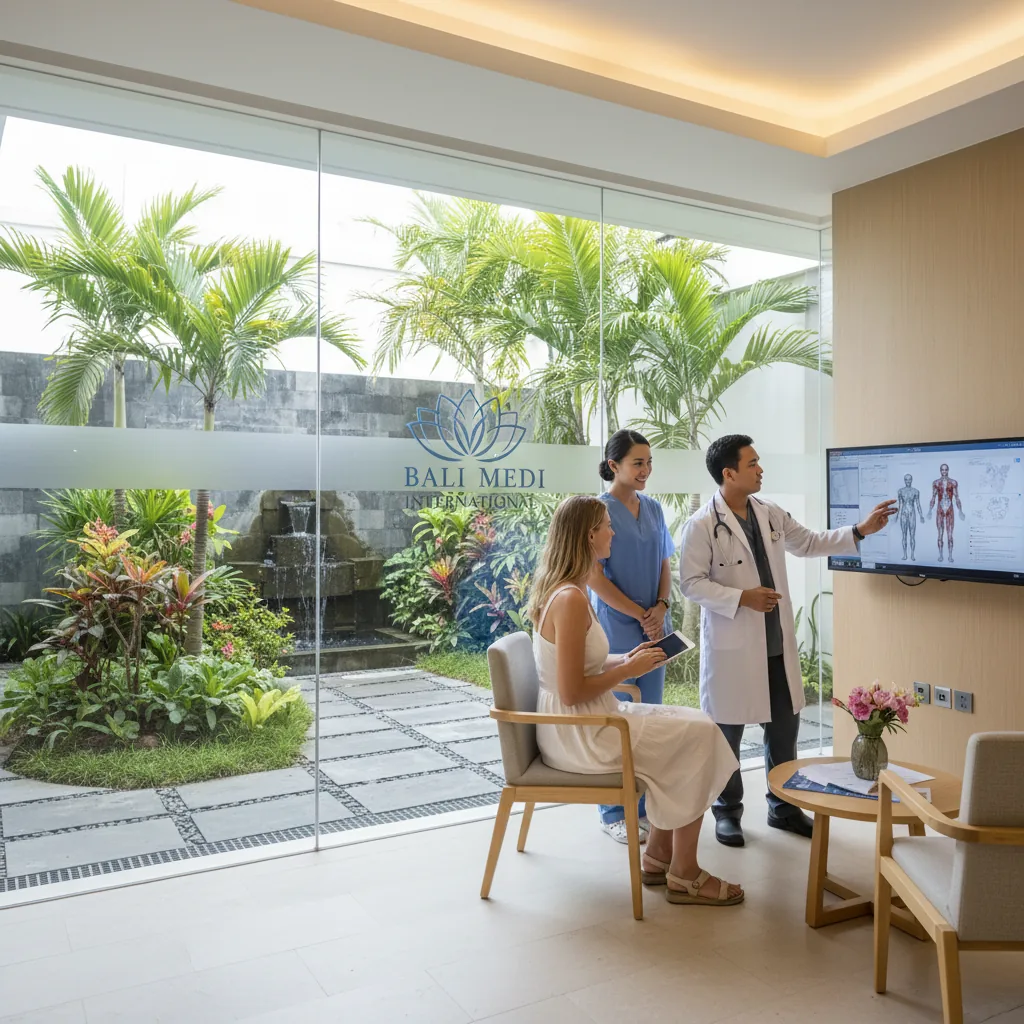
One of the most common fears Dubai expats have about relocating to Bali is healthcare quality. After five years supporting expat relocations, we can confidently say: Bali’s healthcare infrastructure exceeds expectations and is dramatically more affordable than Dubai’s private system.
Bali has three internationally-accredited hospitals (BIMC, Siloam, and BROS) with English-speaking doctors, digital records, and 24/7 emergency services. Healthcare costs are 40–60% lower than Dubai private hospitals, and top international health insurance plans cover all Bali facilities.
BIMC Hospital Bali
Most popular with expats. 24-hour emergency. International doctors. Dental, imaging, laboratory. Kuta and Nusa Dua locations. Accepts most international insurance plans including Cigna, AXA, Allianz, and Bupa. Average GP consultation: $25–$45 vs $80–$120 in Dubai.
Siloam Hospital Bali
Largest hospital network in Indonesia. Full specialist services including cardiology, oncology, neurology. Modern facilities. International patient services. Located in Denpasar. For complex procedures requiring specialist care. ISO certified. JCI accreditation in progress.
International Insurance in Bali
All major international health insurance plans cover Bali hospitals: Cigna Global, AXA International, Allianz Care, April International, and Aetna. Monthly premiums: $150–$400/person. Emergency evacuation to Singapore or Australia included. We recommend Cigna or AXA for Dubai expats as both have direct billing at BIMC.
Healthcare costs factor into your total Bali cost of living. See our Bali safety guide for expat health and safety overview.
Frequently Asked Questions
Is healthcare quality in Bali really comparable to Dubai?
For routine and emergency care, yes. BIMC and Siloam have international medical standards, English-speaking doctors trained at overseas institutions, and modern diagnostic equipment. For highly complex procedures (advanced cancer treatment, complex cardiac surgery), medical evacuation to Singapore is the standard recommendation — a flight of approximately 2.5 hours.
What does a hospital visit cost in Bali?
GP consultation: $25–$45. Specialist consultation: $50–$100. X-ray: $20–$40. Blood test panel: $30–$80. Emergency room visit: $100–$300 depending on treatment. Compare this to Dubai: GP $80–$150, specialist $150–$300, ER $400–$800+. Annual healthcare savings for a family of four: typically $8,000–$20,000.
Can I use my current international health insurance in Bali?
If your current insurance is a true international health plan (not UAE-only), it will likely cover Bali. Check your policy for “worldwide coverage” and whether Southeast Asia is included. Most Cigna, AXA, and Bupa international plans cover Indonesia. We recommend verifying before departure and can help you optimise your coverage.
What about dental and mental health care?
Bali has excellent private dental clinics with Western-trained dentists. Teeth cleaning: $20–$40. Filling: $30–$80. Dental implant: $600–$1,200 (vs $2,000–$4,000 in Dubai). Mental health services have expanded significantly, with qualified English-speaking psychologists and therapists available in Canggu, Seminyak, and Ubud.
Get Expert Bali Relocation Help
Free 30-minute consultation. 400+ Dubai families helped. WhatsApp response in 10 minutes.
Bali Healthcare Reality: What Dubai Expats Need to Know
Bali’s healthcare system has evolved substantially over the past decade, driven by the demands of its international resident and tourist population. The island now supports a network of international clinics, Western-trained specialists, and one Joint Commission International (JCI)-accredited hospital. For routine medical care, dental treatment, physiotherapy, and most specialist consultations, Bali’s facilities are competent and significantly more affordable than Dubai equivalents. The important caveat — and one all prospective residents must understand — is that for complex surgical procedures, oncological care, or advanced cardiac interventions, the appropriate standard is Singaporean or Australian hospitals, accessible via medical evacuation insurance.
BIMC Hospital Kuta is the most internationally recognized facility, with emergency services 24/7, a hyperbaric chamber (critical for diving-related decompression illness), and direct evacuation partnerships with Singapore’s Mount Elizabeth and Raffles Hospital. BIMC charges Western-comparable rates, which is still 40-60% below Dubai private hospital pricing. For the majority of expat health needs — infections, injuries, chronic condition management, maternal care — BIMC provides a genuinely reassuring level of care.
Specialist Medical Services in Bali
SOS Medika Clinics in Kuta and Seminyak serve the comprehensive primary care needs of expats with a team of international physicians, on-site laboratory facilities, and a medical concierge service that can coordinate specialist referrals. Kasih Ibu Hospital in Denpasar has strong obstetric and gynecological services, making it the preferred facility for expat pregnancies. The Ubud area is served by Ubud Husada (formerly BIMC Ubud), which handles emergency cases and routine care for the large wellness-focused expat community in central Bali.
Dental care in Bali is a particular highlight — many Dubai expats find that regular dental treatment (cleaning, fillings, cosmetic work, orthodontics) costs 70-80% less than UAE dental clinic rates, with quality that frequently exceeds Dubai’s middle-market dental chains. Bali Implant Aesthetic in Kuta and The Dentist Seminyak are two facilities consistently recommended by long-term expat residents for complex dental work.
Mental health services have expanded significantly to serve Bali’s large expat population, many of whom arrive carrying the psychological residue of high-pressure UAE corporate careers. English-speaking therapists, psychiatrists, and counselors now practice across several Bali clinics, with telehealth options augmenting in-person availability. The Bali Expat community broadly acknowledges that the island’s physical environment, social connections, and lifestyle pace contribute positively to mental health outcomes — but professional support remains valuable during the transition period and beyond.
Our relocation service includes a healthcare orientation as standard: introductions to our preferred GP, dentist, and specialist network, guidance on international health insurance selection (key carriers include AXA Global, Cigna Global, and Allianz Care), and a 24-hour emergency contact protocol for clients in their first year. We recommend all clients maintain evacuation insurance with medical repatriation coverage — this is the single most important insurance product for Bali residents and costs approximately USD 200-400 annually.
Insurance Essentials for Bali Residents
The international health insurance decision is one of the most important financial choices for Dubai expats relocating to Bali. Unlike the UAE, where employer-provided health insurance is mandatory and typically comprehensive, Indonesia’s healthcare system requires proactive personal insurance management. The key products: international health insurance with inpatient and outpatient coverage (minimum USD $500,000 annual limit recommended), emergency medical evacuation insurance (critical for serious incidents requiring Singapore-level care), and travel insurance for short trips to other Indonesian islands where even the Bali healthcare infrastructure is not available.
Recommended international health insurance providers for Bali residents: AXA Global (strong Asian network, Indonesian hospital relationships, reliable claims processing), Cigna Global (good digital interface, competitive premiums for healthy under-50 profiles), Allianz Care (strong evacuation network, comprehensive regional coverage), and Pacific Cross (Southeast Asia specialist with Bali-specific plan structures). Indonesian BPJS Kesehatan (the national health insurance system) is available to KITAS holders for approximately IDR 100,000-150,000 (USD 6-9) per month and covers Indonesian public hospital care — it is a useful supplement to international insurance for routine care but not a substitute for comprehensive international coverage.
Diving-related medical events deserve specific attention for the significant proportion of Bali residents who dive regularly. Decompression illness (DCI), barotrauma, and marine creature envenomation are genuine medical risks in a population that dives frequently in diverse conditions. Ensure your international health insurance policy specifically covers scuba diving (some exclude it as a “dangerous sport” — a misclassification for recreational diving that requires explicit policy language to override). BIMC Kuta’s hyperbaric chamber is the primary DCI treatment facility in Bali; evacuation insurance should specify Bali as an acceptable treatment destination for diving emergencies rather than defaulting to Singapore for all serious conditions, which would be appropriate for most conditions but unnecessarily complex for DCI specifically.